
How Many Boxes Fit on a Pallet? Standard 48×40 & Euro Pallet Calculation Guide (2026)
Standard GMA 48″ × 40″ Pallet Stacking Rule
To determine how many boxes fit on a pallet, multiply Boxes Per Layer (Tier) × Number of Vertical Layers. On a standard North American GMA 48″ × 40″ pallet loaded to a standard 48-inch shipping height:
36 Boxes
(9 / layer × 4 layers)
48 to 60 Boxes
(12 / layer × 4–5 layers)
112 Boxes
(16 / layer × 7 layers)
~25% Less
(1200 × 800 mm footprint)
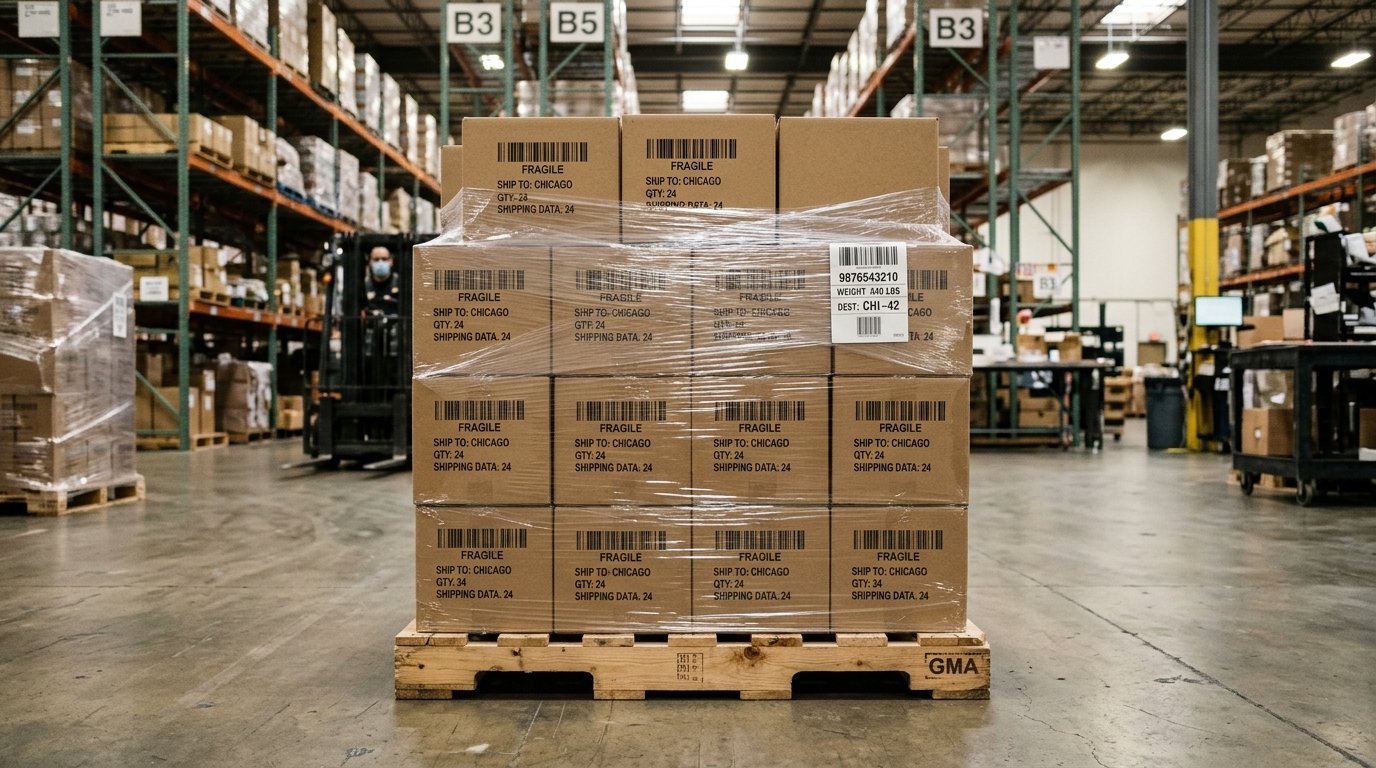
Table of Contents
- Interactive Pallet Box Fit Calculator
- The Core Pallet Calculation Formula Explained
- Standard Box Sizes on GMA 48×40 vs. Euro Pallet (Capacity Matrix)
- Column Stacking vs. Interlocking: Stability & Strength Rules
- The Danger of Overhang and Underhang in Freight Logistics
- Pallet Weight Capacities: Static vs. Dynamic LTL Ratings
- Frequently Asked Questions
Pallet Box Fit & Stacking Calculator
Real-Time Logistics Stacking Engine
36 Boxes
9 / Layer
4 Tiers
580 lbs
90%
Total Boxes = floor(Deck Length / Box Length × Deck Width / Box Width) × floor(Usable Height / Box Height)Calculate Total Freight Volume in CBM Calculator →
The Core Pallet Calculation Formula Explained
Calculating pallet capacity is a foundational requirement in e-commerce fulfillment, freight forwarding, and warehouse management. Under-calculating leads to wasted shipping volume (freight phantom air), while over-calculating results in structural crushing, rejected shipments, and costly carrier re-handling fees.
The mathematical calculation consists of three sequential steps:
1. Calculate Boxes Per Horizontal Layer (Tier):
Test both parallel and perpendicular orientations against pallet deck dimensions:
- Orientation A (Lengthwise):
floor(Pallet Length / Box Length) × floor(Pallet Width / Box Width) - Orientation B (Crosswise):
floor(Pallet Length / Box Width) × floor(Pallet Width / Box Length)
2. Calculate Maximum Vertical Layers (Tiers):
Subtract the physical pallet base height (typically 6 inches for wooden skids or 15 cm for Euro pallets) from your carrier’s maximum height restriction:
Layers = floor((Max Permitted Height - 6 Inches) / Box Height)
3. Calculate Total Unit Capacity:
Total Pallet Boxes = Boxes Per Layer × Total Vertical Layers
Standard Box Sizes on GMA 48×40 vs. Euro Pallet (Capacity Matrix)
The table below details standard commercial packaging carton sizes stacked to a standard 48-inch shipping height across both the North American GMA 48″ × 40″ standard and the European EUR 1 (1200 × 800 mm) standard:
Column Stacking vs. Interlocking: Stability & Strength Rules
How cartons are placed upon each layer directly affects transit integrity and packaging compression resistance:
- Column Stacking (Corner-to-Corner Alignment): Boxes are stacked directly on top of each other, aligning all four vertical box corners. Corrugated boxes derive over 60% of their top-to-bottom compression strength from their vertical corner edges. Column stacking provides maximum compression resistance (100% rated stacking strength), preventing bottom-tier box crushing. However, column stacks are vulnerable to tipping during forklift handling unless tightly stretch-wrapped.
- Interlocking Stacking (Pinwheel / Brick Pattern): Cartons are rotated 90 degrees on alternating tiers, like bricks in a masonry wall. This creates superior lateral stability and prevents shifting during transport. However, interlocking patterns place box corners over the weaker center of the box beneath them, reducing total compression strength by 30% to 50%. Use high ECT (Edge Crush Test) corrugated board when interlocking heavy cartons.
The Danger of Overhang and Underhang in Freight Logistics
A frequent shipping mistake is permitting cartons to extend past the wooden pallet deck edges. Industry packaging standards enforce strict adherence to pallet footprint boundaries:
- The 32% Overhang Compression Penalty: When a corrugated box overhangs the pallet edge by just 1 inch, its bottom support edge is completely unsupported. ASTM research proves this reduces the container’s structural stacking strength by up to 32%. Overhanging cartons are also easily punctured by passing forklifts and racking uprights. Amazon FBA and Walmart DC facilities immediately reject overhanging pallets.
- The Underhang Void Penalty: When cartons leave more than 2 inches of exposed wooden deck around the perimeter (underhang), boxes lack perimeter containment and can shift during hard transit braking. To calculate void fill for your cartons, use our free box void fill calculator.
Pallet Weight Capacities: Static vs. Dynamic LTL Ratings
Even if geometric calculations indicate that 60 heavy cartons fit within the physical cubic volume of a pallet, weight limitations establish the true operational ceiling:
- Static Capacity: A standard hardwood GMA pallet can support up to 4,600 lbs (2,086 kg) when resting stationary on a level warehouse floor.
- Dynamic Capacity: When being lifted and transported by a forklift or pallet jack, the safe working limit drops to 2,200 to 2,500 lbs (1,000 to 1,134 kg).
- Carrier LTL Constraints: Most standard LTL carriers (FedEx Freight, Old Dominion, R+L) assess accessorial overweight surcharges on residential or liftgate delivery for pallets exceeding 2,000 lbs. To verify shipping weights, calculate volumetric weight with our dimensional weight calculator.
2026 Freight, Logistics & Shipping Calculation Hub
Standardized dimensional math, freight class density formulas, and cargo container capacity tools:
Frequently Asked Questions: Pallet Box Fit & Logistics
How many boxes fit on a standard 48×40 pallet?
The number of boxes on a standard GMA 48×40 pallet depends on box dimensions. A standard medium box (16x12x10 in) fits 36 boxes (9 per layer across 4 layers). A 12x12x12 inch cube box fits 48 to 60 boxes (12 per layer across 4 to 5 layers).
How do you calculate how many boxes fit on a pallet?
Calculate boxes per layer by dividing pallet length and width by box length and width: (Pallet Length / Box Length) × (Pallet Width / Box Width). Then divide usable pallet height (max height minus 6-inch skid) by box height to get layers. Multiply boxes per layer by total layers.
What is the maximum height for a loaded shipping pallet?
Standard LTL freight carriers cap maximum loaded pallet height at 48 to 60 inches (including the 6-inch wooden pallet). High-cube dry van truckloads allow up to 72 to 84 inches.
What is the maximum weight capacity of a GMA pallet?
A standard 48×40 wooden GMA pallet has a static weight rating of 4,600 lbs, but commercial trucking carriers and forklifts limit dynamic shipping loads to 2,000 to 2,500 lbs for transit safety.
Why is box overhang dangerous on a pallet?
Overhanging boxes extend past the wooden deck edges, which reduces corner compression stacking strength by up to 32%. This causes bottom-tier carton collapse and freight rejection by Amazon FBA or Walmart distribution centers.
How many boxes fit on a European pallet (EUR 1)?
Because a Euro pallet is smaller (1200 × 800 mm or 47.2 × 31.5 inches), it holds approximately 25% to 30% fewer cartons than a North American 48×40 pallet. A 16x12x10 inch box fits 16 total cartons on a Euro pallet compared to 36 total on a GMA pallet.
Explore Related Packaging, Freight & Logistics Calculators
Optimize your warehouse fulfillment operations and reduce shipping overhead with our complete suite of logistics tools:
Pingback: How Many Pallets Fit in a 53ft Truck? Loading Patterns [2026]